
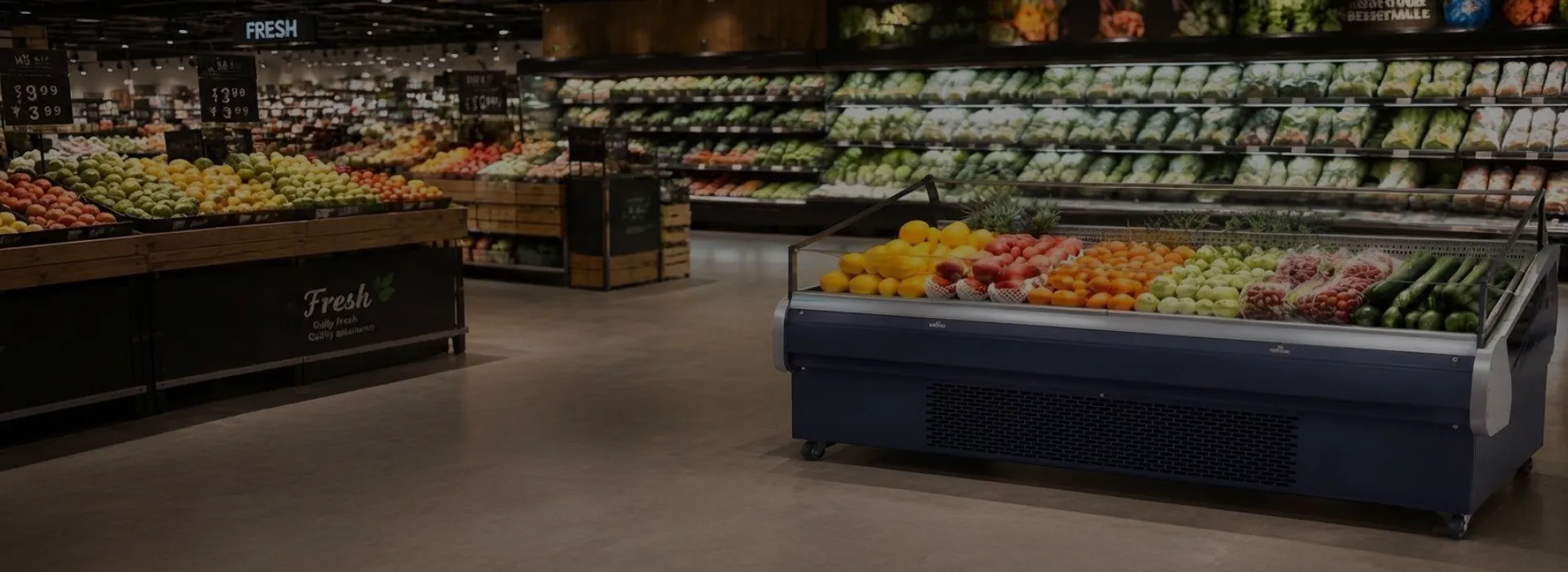
Commercial Island Chiller Overview
In a busy store, the space in the middle of the sales floor is often one of the best places to display products. An island chiller makes use of this area by keeping chilled foods visible from different directions, without taking up extra wall space.
Most stores use these units for products that customers choose by looking first, such as fresh fruits, vegetables, drinks, dairy items, and prepared foods. Open display models make grabbing items faster, while glass top models offer better protection when products need to stay covered during daily operation.
Island Chiller Models for Commercial Food Display
Our island chiller models are designed for supermarkets, grocery stores, and food retailers that need practical refrigeration and clear product presentation. Different display styles are available for fresh food, fruits, vegetables, beverages, and other chilled products.
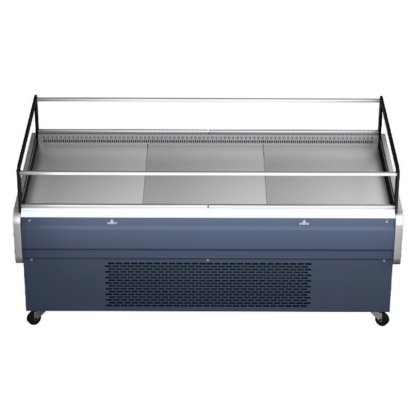 Open Air Island Chiller
Open design for quick access to chilled products, suitable for fruits, vegetables, beverages, and other fresh food displays.
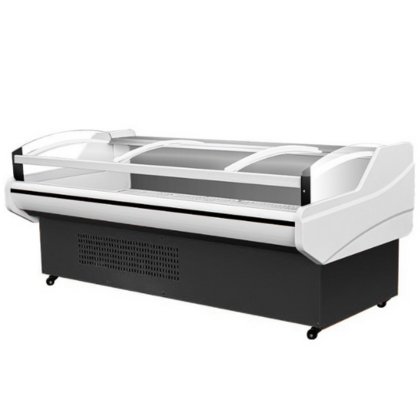 Glass Top Island Chiller
Glass sliding lids help keep products visible while reducing cold air loss, commonly used for chilled food and supermarket displays.
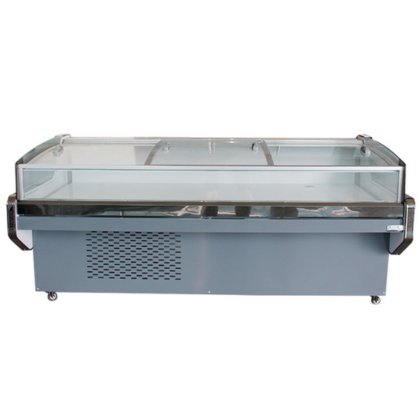 Fresh Food Island Display Chiller
A spacious display solution for presenting fruits, vegetables, meat, and dairy products in fresh food stores and supermarkets.
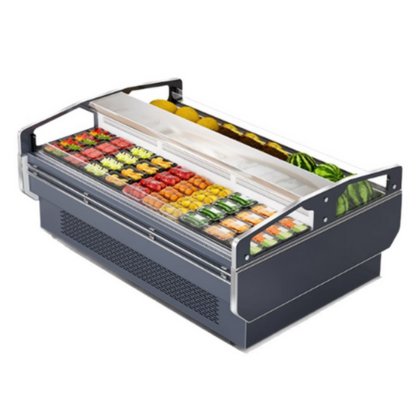 Commercial Island Chiller Showcase
Built for central food displays, this model helps retailers create an attractive presentation area while maintaining proper cooling conditions.
Key Features of Commercial Island Chiller
Island chillers are usually placed in the middle of supermarkets, grocery stores, and fresh food shops. Unlike back-room refrigeration equipment, these cabinets are part of the selling area, so cooling performance and product presentation both matter during daily operation.

Fresh food displays usually stay open for long hours, and products are often added, removed, and rearranged during the day. A stable temperature range helps reduce temperature fluctuations and keeps fruits, vegetables, dairy products, and prepared foods in better condition.

For a large horizontal display cabinet, keeping the same temperature from one side to another is important. The air cooling system helps distribute cold air more evenly, reducing areas that may become warmer during continuous use.

Commercial cabinets are expected to work every day, often for many hours without stopping. The copper tube refrigeration system is selected for its good heat transfer performance and durability, helping maintain stable cooling over long-term operation.

In busy retail areas, customers usually do not want to spend time opening doors when choosing products. The open display design allows shoppers to see the items directly and pick them quickly, which is why it is commonly used for fresh food and beverage displays.

For many food stores, the display effect is just as important as refrigeration. Clear glass allows customers to see products before they approach the cabinet, helping stores create a more attractive presentation for fresh foods and ready-to-sell items.

Store layouts are rarely the same. Some shops need a compact display near the entrance, while others use several cabinets together in a larger sales area. Different island chiller sizes make it easier to match the equipment with the available floor space.
Custom Island Chiller Manufacturing
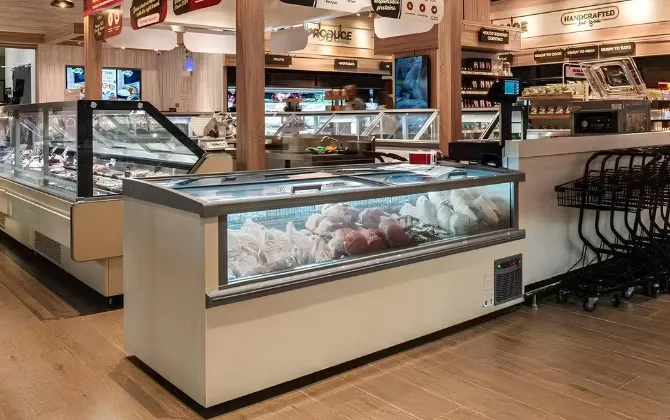
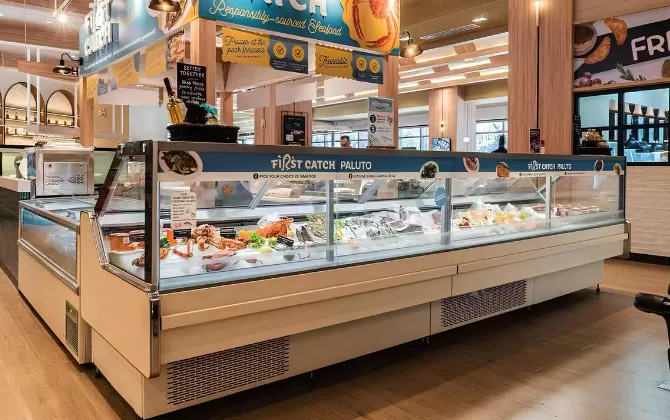
Island chillers are often used in different types of food retail stores, but the same cabinet design does not always work for every location. A fruit shop with limited floor space may need a smaller display, while a supermarket may need several units combined together to create a larger refrigerated island.
For commercial refrigeration projects, the size, display structure, and product arrangement can be adjusted according to how the cabinet will be used in the store.
Custom Sizes for Different Retail Spaces
The available installation area is usually the first thing considered before ordering an island chiller. Some stores need a compact unit placed near the entrance, while others need a longer display for high-volume products.
Different lengths and layouts can be customized to match the store space, including grocery stores, fresh food markets, and specialty food shops.
Display Configurations for Different Food Products
The products displayed inside the cabinet often decide the right configuration. Fresh fruits and vegetables usually require easy access for customers, while dairy products, beverages, and prepared foods may need a different display arrangement.
Custom island chiller designs can be adjusted based on product type, shopping habits, and daily operation requirements.
OEM Island Chiller for Commercial Refrigeration Projects
Standard models may not always match every market requirement. OEM island chiller projects can include adjustments to cabinet design, appearance, configuration, and other product details according to distributor or retailer needs.
Island Chiller Applications in Retail Food Display
The same refrigeration equipment does not always work for every store. A supermarket with a large fresh food area has different needs from a small fruit shop or a specialty food store. Island chillers are usually selected when products need to be displayed in the sales area and customers need to choose items directly.
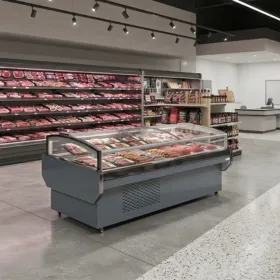
In a supermarket, fresh meat is usually one of the areas customers spend time comparing products. Chicken, pork, beef, and packaged fresh foods need to be displayed clearly instead of being hidden inside a storage cabinet.
Island chillers are often placed in fresh food sections where stores need more display space. For larger supermarkets, multiple cabinets can be combined to create a longer product area.
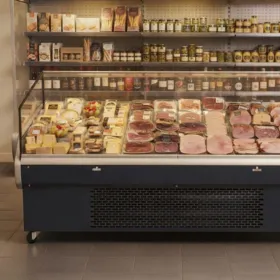
Not every grocery store has the same layout. Some stores have a separate fresh food area, while others need to use the available space near the main shopping path.
Island chillers can be used for vegetables, packaged foods, and other chilled products that need frequent customer access during the day.
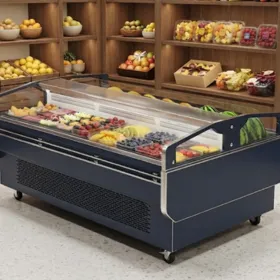
For fruit stores, the appearance of products is part of the selling process. Customers usually want to see the quality of fruits before choosing what to buy.
A low island display allows seasonal fruits and fresh produce to be arranged at a comfortable viewing height, making it easier for customers to browse different products.
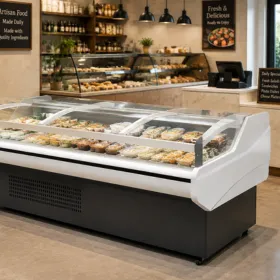
Prepared food and specialty products are often sold based on freshness and presentation. Stores such as deli shops and fresh food retailers may use island chillers to keep products visible while maintaining a clean display area.
This type of cabinet works well for ready-to-sell foods that customers can select quickly during daily shopping.
Quality Assurance and Supply Support for Island Chillers
A commercial island chiller usually becomes part of a store’s daily operation. Once it is installed, problems with cooling, cabinet condition, or transportation damage are not easy to deal with. For this reason, the details before delivery are worth checking carefully.
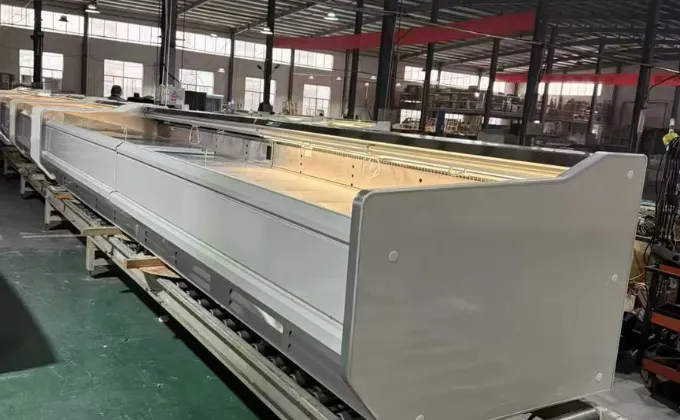
A refrigeration cabinet is made up of many small details. A problem with the size, sealing, or internal assembly may create trouble during installation.
Before delivery, the cabinet is checked for appearance, dimensions, internal structure, drainage parts, and component fixing. Details such as scratches, dents, sealing strips, labels, and refrigeration pipe installation are also inspected.
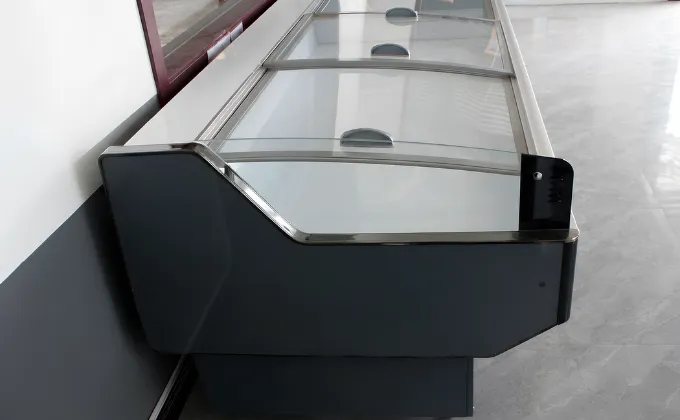
For overseas orders, customers usually cannot check the equipment until it arrives. That makes pre-shipment testing an important step.
Before shipping, the island chiller is operated to check the refrigeration system, temperature control, and main components. The purpose is simple: make sure the cabinet is working normally before it starts its journey.
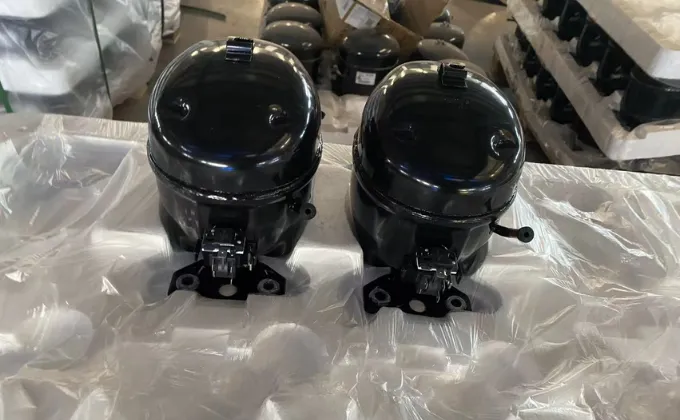
The parts inside the cabinet are not something customers see after installation, but they affect how the equipment runs every day.
Island chillers are built with commercial refrigeration components, including branded compressors, copper tube refrigeration systems, and one-piece foamed insulation. These choices help the cabinet handle continuous operation in supermarkets, fruit stores, and fresh food areas.
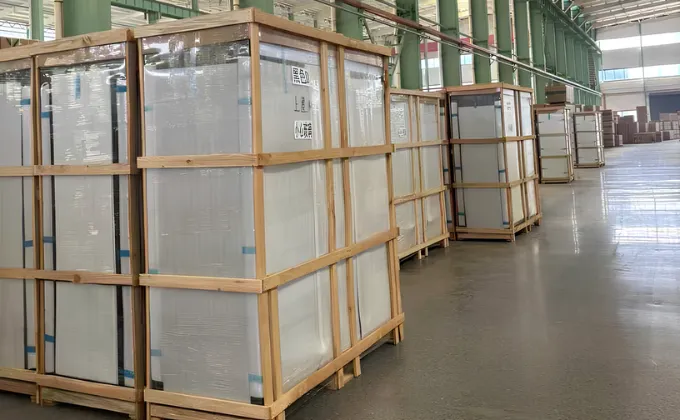
Large commercial refrigeration equipment requires more protection during transportation than standard products. The glass, cabinet surface, and internal structure need to be protected carefully before the unit starts its journey.
Before shipment, foam protection is added around key areas, followed by carton packaging and a waterproof protective film to reduce the risk of scratches, moisture, and impact. A wooden frame is then used for additional support during loading and long-distance delivery.

Related Products
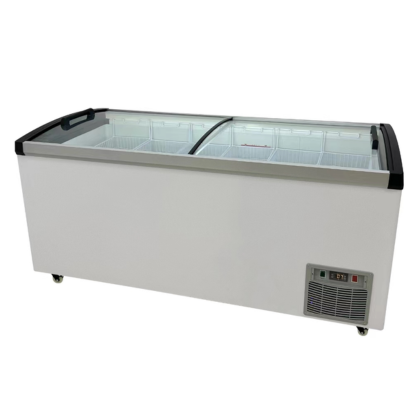
For stores handling a larger amount of frozen products, an island freezer adds extra display capacity while keeping products easy to browse.
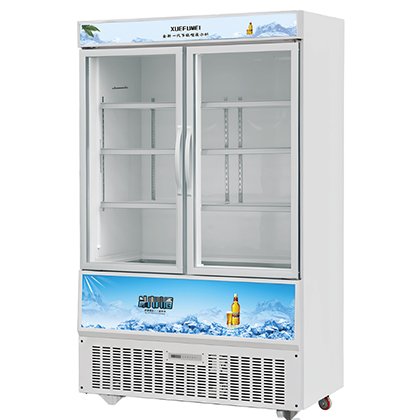
An upright display freezer is a good option when vertical space works better than a wide cabinet. Glass doors keep frozen products visible while saving floor area.
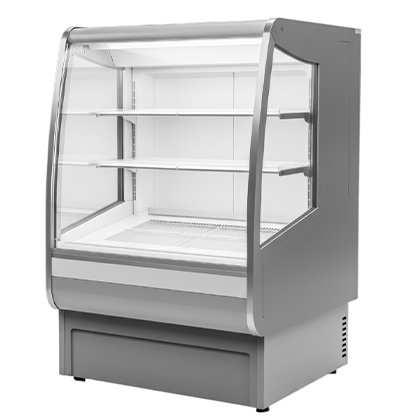
Open air merchandisers are often seen in fresh food and grab-and-go areas where customers need to view products quickly.
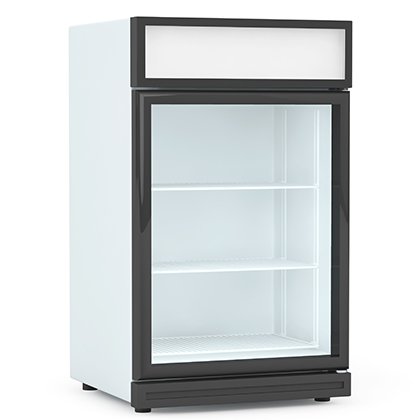
For smaller display needs, a countertop display refrigerator can add product visibility near checkout counters, service areas, or limited retail spaces.
Commercial Island Chiller Selection Guide
Buying an island chiller is usually not as simple as choosing the biggest model or the lowest price. A cabinet that works well in one store may not be the best fit for another. The products you sell, the available space, and the way customers shop all change what makes sense for a commercial island chiller.
How to Choose the Right Island Chiller Size
Size is one of the first things most buyers look at, and it is easy to think bigger is always better. But a larger island chiller also means more floor space is needed around the cabinet.
For a supermarket with a large fresh food section, extra display area can be useful. For a small fruit store, a compact model may work better because it leaves more room for customers to move around.
Before placing an order, check the actual installation area instead of relying only on catalog dimensions. The space shown in a product photo can look very different from a real fresh food display environment.
Open Air Island Chiller vs Glass Top Island Chiller
These two designs are often chosen for different reasons.
An open air island chiller is convenient when customers need to quickly see and pick products. It is commonly used in busy areas where people make quick purchasing decisions.
A glass top island chiller takes a different approach. The products stay covered, but customers can still see what is available inside. This style is often preferred when stores want a more organized display.
The better choice depends on how the products are sold, not just which design looks better.
Related Reading: Open Air vs Glass Top Island Chiller: Which One Fits Your Store?
Selecting an Island Chiller for Different Food Products
The type of food being displayed often affects the cabinet choice.
A fresh meat display usually needs enough depth for arranging different cuts, while a fruit display may focus more on keeping products attractive and easy to view. Stores selling prepared foods may need a layout that makes different items easier to compare.
The cabinet should fit the products, rather than trying to make the products fit the cabinet.
What to Consider Before Purchasing an Island Chiller
The price on the quotation is important, but it is only one part of the decision.
Cooling performance, temperature range, energy use, maintenance, and installation requirements can all affect the experience after the cabinet is in daily operation.
A model that looks like a good deal at the beginning may not be the best option if it does not match the store’s actual needs.
Related Reading: Commercial Island Chiller Buying Checklist
Many supermarkets use island chillers in fresh meat areas because the products are easier to arrange and customers can see more items at once.
For example, a store may place different cuts in the same cabinet instead of separating them into several small displays.
The temperature setting is normally adjusted according to the products being displayed. Fresh meat, seafood, and prepared food sections may not use exactly the same setting.
This is something some customers ask when they compare open and closed cabinets.
An open island chiller allows customers to pick products without opening a door many times during the day. The refrigeration system is designed to handle the air movement around the display area.
Where the cabinet is installed also makes a difference. A unit near a store entrance will normally work differently from one placed inside a cooler area.
The cabinet size is not only about how many products you want to display.
A cabinet that fits the wall space may still affect customer movement if the aisle is too narrow. Staff also need room to refill products and clean the inside area.
Before making the cabinet, we usually check the installation dimensions and product layout.
Yes, because not every retail project has the same layout.
Some stores have fixed aisle positions, existing counters, or limited display areas. In these cases, a standard cabinet size may not match the plan.
We can discuss the cabinet length, internal arrangement, and appearance details before production.
Temperature is important, but it is not the only thing that affects daily use.
A cabinet may reach the required temperature during testing, but long-term operation also depends on the compressor, copper tubing, insulation, temperature controller, and overall structure.
At the factory, we check dimensions, cabinet appearance, refrigeration operation, electrical safety, and packaging before shipment.
Large refrigeration cabinets need protection during transportation.
The cabinet goes through several packaging steps before loading. We use foam protection, carton packaging, waterproof protection film, and a wooden frame.
This helps protect the cabinet surface and structure during handling and overseas delivery.
The compressor warranty is 3 years.
For commercial refrigeration equipment, the compressor is one of the parts customers usually ask about before ordering because it is the main part of the cooling system.