
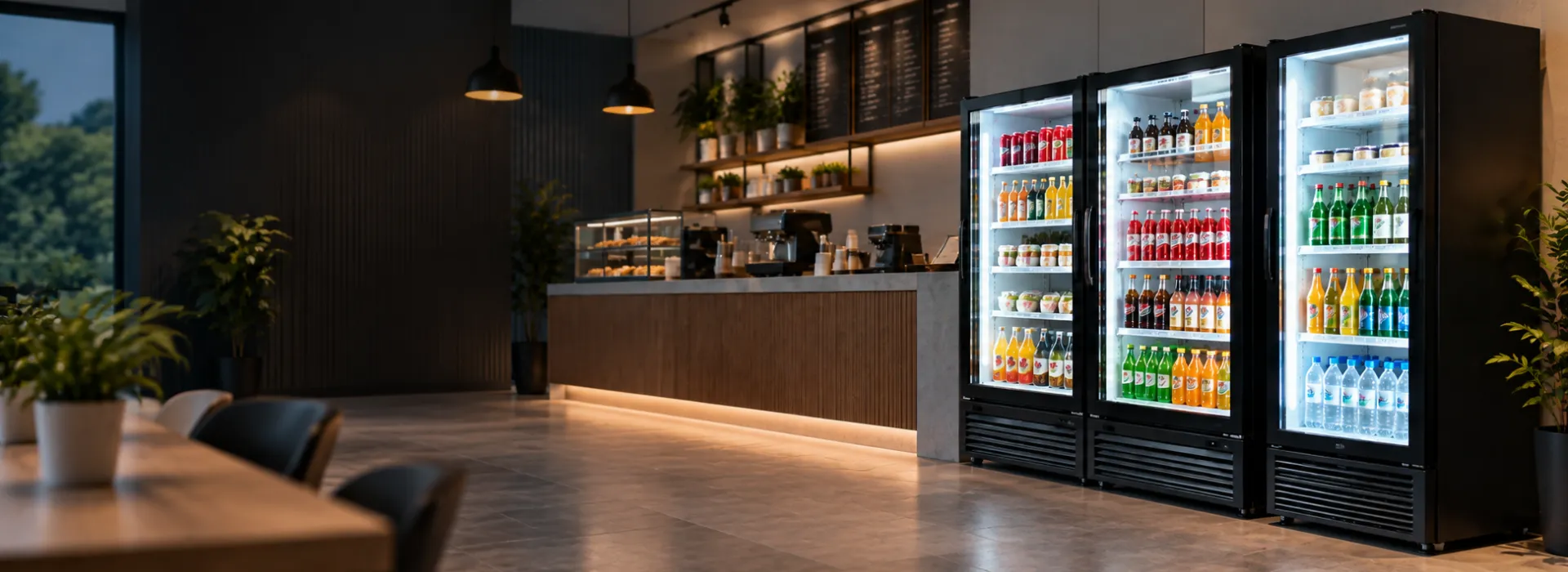
Find the Right Glass Door Refrigerator
Choosing the right glass door refrigerator starts with how much space and storage capacity you need. Compact glass door fridges work well where space is limited, while larger glass front refrigerators provide more room for products that need to stay visible and easy to access. Consider capacity, available space, storage needs, and usage frequency when comparing options. Explore the range below to find a refrigerator with glass door that fits your market or project.
Glass Door Refrigerator Product Range
Choose from glass door refrigerators for home and commercial markets, with different capacities and configurations available to match varying storage, space, and display requirements. Compare the two ranges below to find the right starting point for your refrigeration needs.
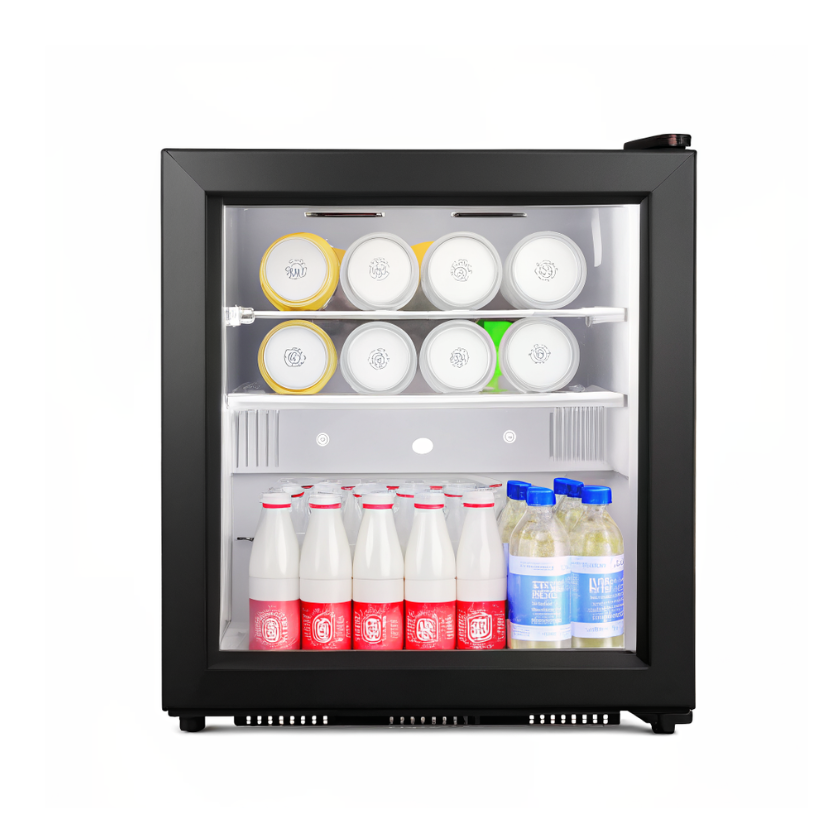
Available in capacities from 60L to 200L, our home glass door refrigerators cover compact and larger storage needs. Choose a model based on your available space and the amount of food, drinks, or other items you want to keep chilled. The glass door also keeps contents visible, making everyday storage easier to check.
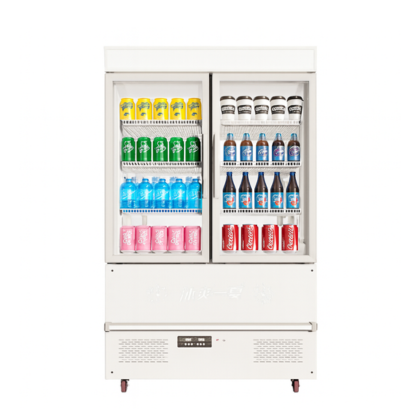
Our commercial glass door refrigerators provide more storage and display space for shops, cafés, foodservice, and other business settings. Different capacities and door configurations are available, so you can choose a model based on your floor space, product volume, and daily storage needs while keeping refrigerated products visible.
Glass Door Refrigerator Features
A glass door refrigerator should make everyday storage simpler, not just keep products cold. Xuefumei’s range combines clear visibility, practical storage, temperature control, and different size options, helping you find a refrigerator that works well for the way it will actually be used.

The transparent glass door lets you see food, drinks, or displayed products at a glance, without opening the refrigerator just to check what is inside.

Reliable refrigeration helps keep stored items at a suitable temperature, giving you dependable cold storage for food, drinks, and other refrigerated products.

Practical shelving helps you organize bottles, cans, food, and other items, while making better use of the available space inside the cabinet.

Interior lighting makes it easier to see what is stored inside, so products remain clearly visible even when the surrounding area is not very bright.

Compact and larger models give you more flexibility when space is limited or extra storage is needed, without forcing every application into the same cabinet size.

Straightforward temperature controls make it easier to set the cabinet for different storage needs, while the available settings and control design vary by model.
Custom Glass Door Refrigerator & OEM Solutions
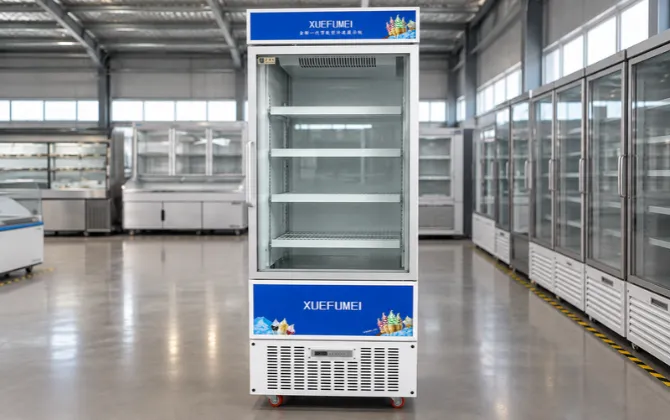
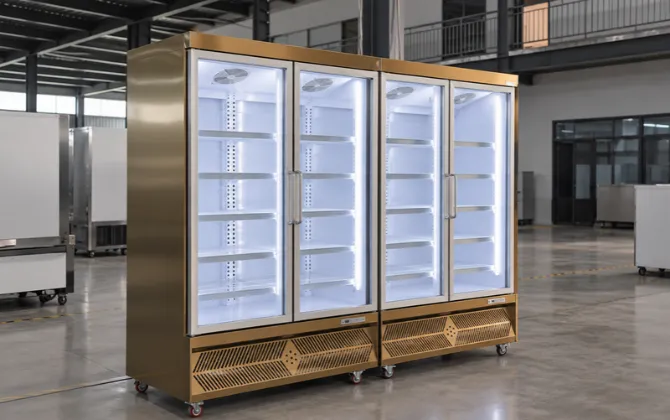
Different markets often call for more than a standard refrigerator with a new logo. Xuefumei supports OEM glass door refrigerator projects with changes to branding, appearance, electrical specifications, selected product configurations, and packaging. Customization is based on existing home and commercial models, so buyers can adapt a proven product to their market while keeping the original capacity and cabinet dimensions.
Branding & Appearance Customization
For private-label products, the refrigerator needs to look like part of the buyer’s own range. Logo, cabinet color, finish, and branding position can be adjusted to match an existing visual style, helping the finished product stay consistent with the rest of the brand’s refrigeration line.
- Custom Logo
Brand logos can be applied in suitable positions and formats for a consistent private-label presentation. - Cabinet Color & Finish
Cabinet color and supported finishes can be matched more closely to the appearance of an existing product range. - Logo Position & Printing
Logo placement and printing details can be discussed according to the selected model and required product appearance.
Electrical & Product Configuration
A refrigerator sold in one market may not be ready for another without changes to its electrical or operating setup. Depending on the selected model, Xuefumei can adapt voltage and frequency, plug type, temperature range, refrigeration setup, door configuration, and shelving to suit the requirements of the project and destination market.
- Voltage & Frequency
Electrical specifications can be matched to the requirements of different destination markets. - Plug Type
Suitable plug options can be specified according to the country or market where the refrigerator will be used. - Temperature Range
Supported temperature settings can be adjusted according to the storage requirement and selected refrigerator model. - Refrigeration Setup
Cooling-related configurations can be reviewed and adapted where the product platform supports the requested change. - Door Configuration
Supported door options can be selected or adjusted according to the model and intended use. - Shelf Configuration
Shelf arrangements can be adapted to better suit the type and quantity of products expected to be stored.
Packaging & Private-Label Details
OEM work continues beyond the refrigerator itself. Product labels, nameplates, packaging, and shipping cartons can also carry the information or branding required for the buyer’s market. This gives brands and distributors a more complete private-label product that is prepared for identification, distribution, and sale after delivery.
- Product Labels & Nameplates
Product identification and nameplate details can be prepared around the branding and information required for the project. - Custom Packaging
Packaging artwork and branding can be adapted for private-label or distributor product lines. - Carton Requirements
Outer-carton details can be adjusted to suit the required branding, identification, and shipping presentation.
Model-Based Customization
OEM customization starts with an existing Xuefumei glass door refrigerator model. Capacity and cabinet dimensions are selected from the available product range rather than developed to a custom size. Once the base model is chosen, supported branding, electrical, product, and packaging details can be adjusted around the requirements of the project.
Glass Door Refrigerator Applications
From a small fridge beside a home theater to a double-door refrigerator in a busy shop, the way people use a glass door refrigerator can be quite different. That is why our range includes different sizes and storage layouts, with models for both everyday and commercial use.
Home & Entertainment SpacesKeep a few cold drinks close to the sofa instead of walking back to the kitchen halfway through a movie. A small glass door fridge fits naturally in a home theater, game room, or bar area, with enough room for the drinks and snacks you want nearby. | 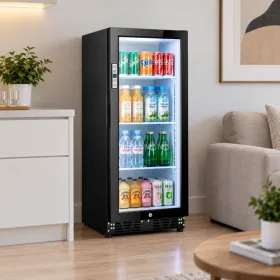 |
Offices & Shared SpacesA fridge stocked with cold drinks, bottled coffee, or milk is a small but welcome addition to an office. Put one in the break room or shared area and employees have something cold to grab during the day. The shelves also make regular restocking easier to manage. | 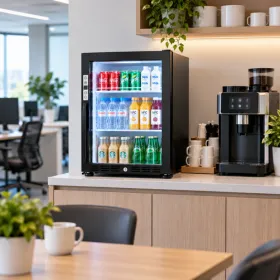 |
Retail StoresIn a small shop, every bit of floor space counts. Rather than adding several small units as drink sales grow, a larger or double-door refrigerator gives you more room for bottles and cans in one place. Shelves help separate different brands and drink types, so restocking is less of a mess too. | 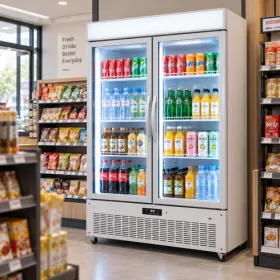 |
Cafés & FoodserviceMilk for coffee, bottled drinks, slices of cake, small desserts—there can be quite a mix to keep cold behind a café counter. A refrigerator with practical shelf space makes it easier to give each item its place, and different cabinet sizes let you choose one that does not take over the working area. | 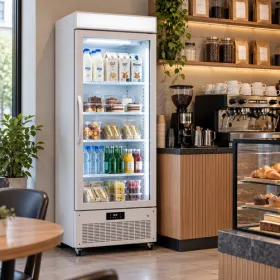 |
Beverage Display & SalesWhen customers pick drinks straight from the fridge, presentation starts to matter. Bottles and cans can be arranged by brand or flavor, with the glass door and interior light keeping the selection in view. Larger models also leave more room for popular drinks, so you are not refilling the shelves quite as often. | 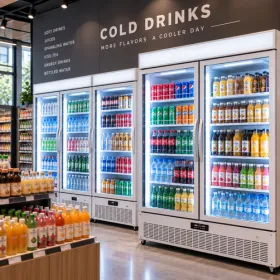 |
Glass Door Refrigerator Projects
The right refrigerator depends on what you need to store, how much space you have, and how the cabinet will be used each day. These are some of the glass door refrigerators we have produced for real applications—from a compact drinks cabinet to retail refrigeration and a custom foodservice unit.
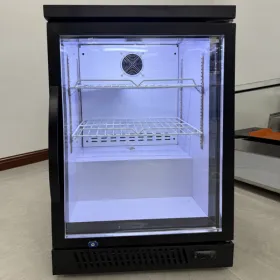
This compact model was made for a bar and drinks setup where a full-size refrigerator would take up more room than needed. Bottles and cans can be kept close at hand, and the shelf positions can be changed when taller bottles need more space. It is a simple option when you want useful refrigerated storage in a smaller footprint.
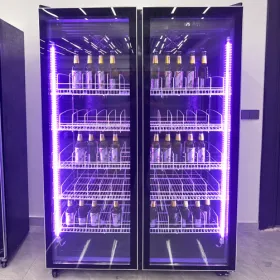
Wine bottles take up space quickly, so this customer went with a tall double-door cabinet rather than several smaller units. Multiple shelf levels make better use of the cabinet height and give plenty of room for bottles. Opening one door at a time is also more practical when staff only need something from one side.
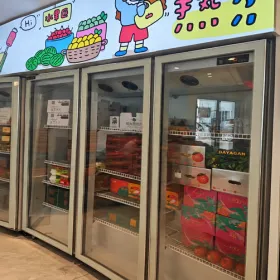
For this fruit shop, several refrigerators were lined up together to create the amount of refrigerated space the store needed. Boxed fruit and other products can be divided between different cabinets and shelves instead of being crowded into one unit. This setup also gives the store more flexibility when organizing stock for sale.
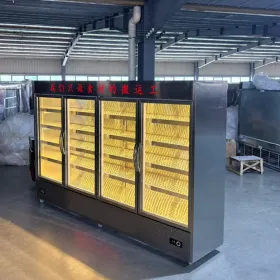
A standard drinks fridge would not have worked as well for this job. The customer needed a wider cabinet with plenty of separate shelf space for the ingredients used in a chuanchuan and malatang business. We produced this four-door version around that use, giving staff more room to sort ingredients and find what they need during service.
From Glass Door Refrigerator Production to Shipment
For a bulk refrigerator order, what happens on the factory floor matters just as much as the specifications you approve. The cabinet has to be assembled correctly, problems need to be caught before they move further down the line, and the finished refrigerator still has to pass testing before it can be packed. We keep these steps connected from production through shipment.
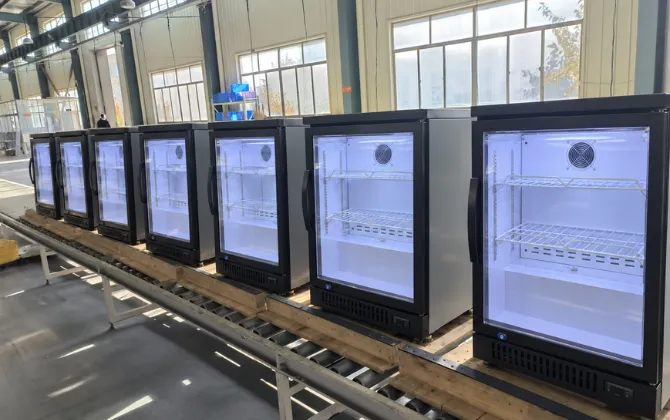
A finished refrigerator comes together in stages rather than in one assembly step. Cabinet work, refrigeration components, electrical parts, doors, shelves, lighting and controls all have to come together as one working unit. For OEM orders, the confirmed branding and product configuration are also followed during production, so the bulk order is built around the version approved for the project rather than adjusted after assembly.
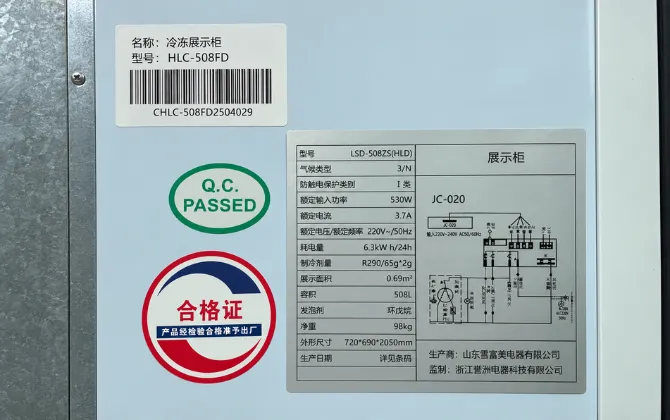
Quality control does not wait until the refrigerator is ready to ship. Checks are made as the product moves through production, so assembly or appearance issues can be dealt with before the next stage. Once the required inspection has been completed, the unit is marked with its inspection status—including the QC passed identification used on our finished products—before it moves forward in the process.
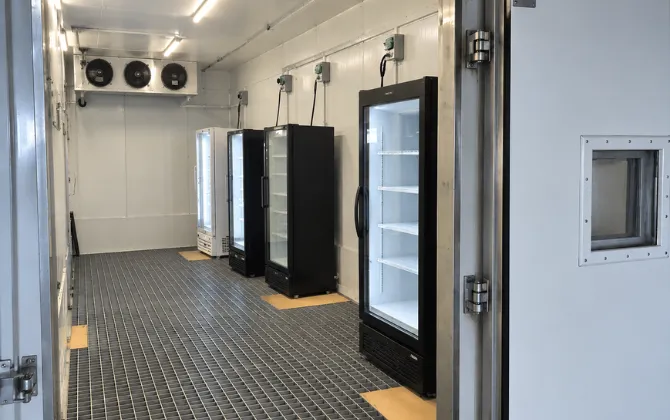
After assembly and inspection, finished refrigerators are sent to our dedicated test room instead of going straight to packing. Here the unit can be powered and checked in operating condition before release, giving the team a chance to find functional problems while the refrigerator is still at the factory. Only after the required testing is completed does the product move on to the packing stage.
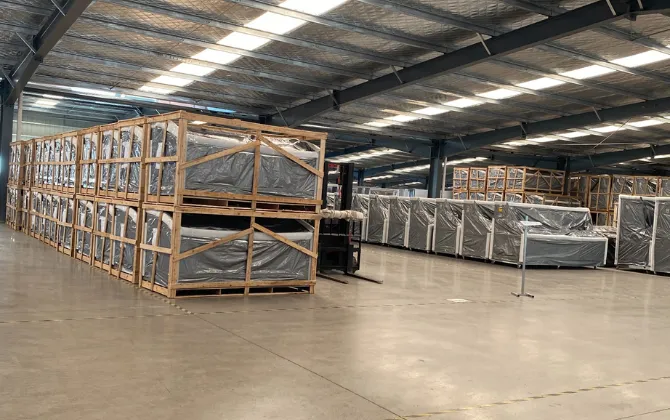
Large refrigerators need more than a carton around the cabinet, especially when glass and finished exterior panels have to travel a long distance. The unit is wrapped to protect the cabinet surface, then secured inside a wooden frame that adds support around the refrigerator during handling and transport. This outer structure also helps reduce direct knocks to the cabinet when the packed unit is moved, loaded or unloaded.
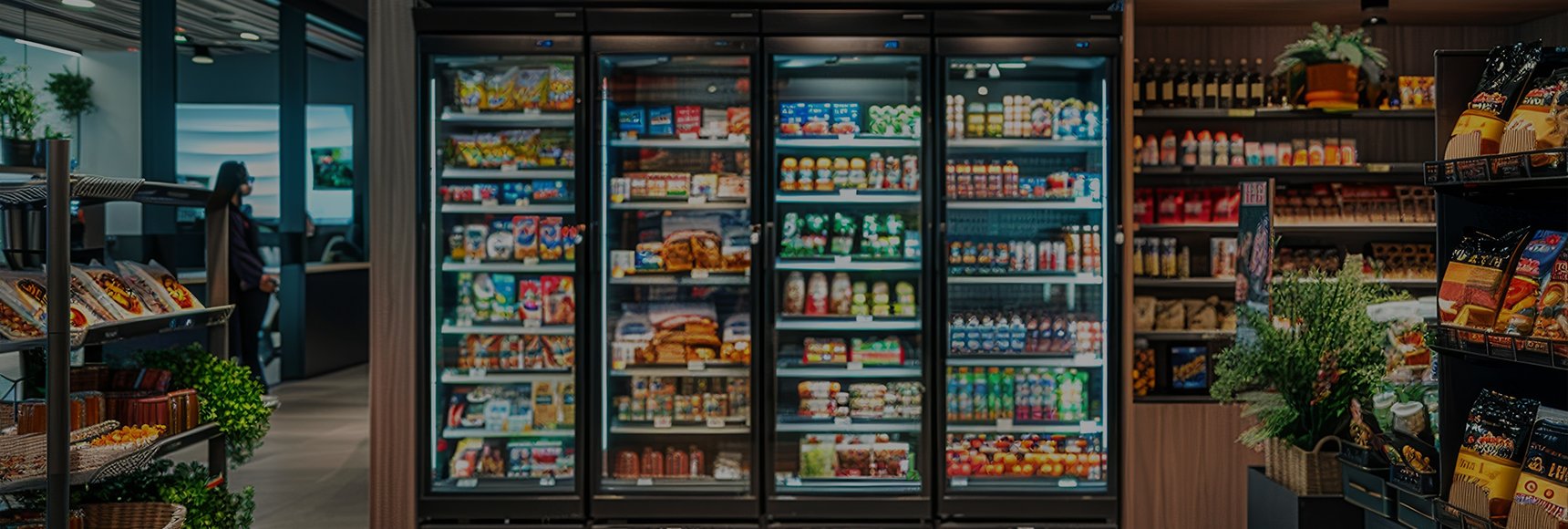
Related Refrigeration Products
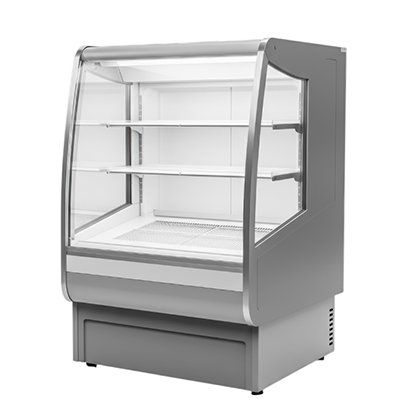
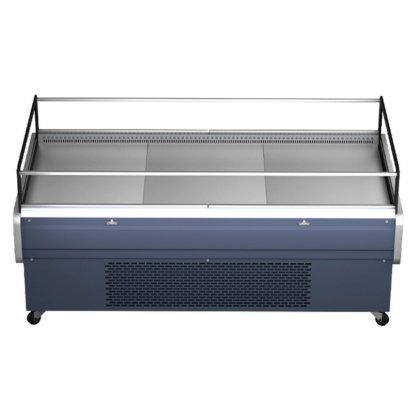
A good option when customers need to pick up chilled drinks, food, or other products without opening a door. The open-front design works well for high-traffic retail areas where quick access is part of the shopping experience.
Designed for stores that want refrigerated products displayed away from the wall. The island layout gives you another way to use the sales floor and makes products accessible from the surrounding shopping area.
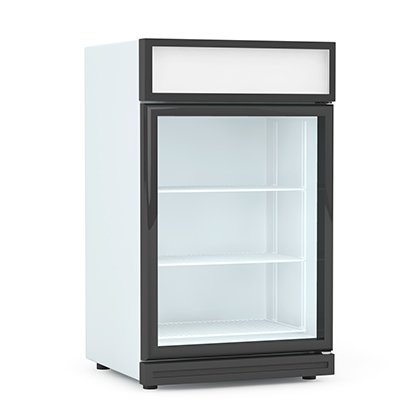
When floor space is limited, a countertop refrigerator brings chilled products closer to the point of sale. It works well for smaller displays on counters, bars, and service areas where a full-size cabinet would be unnecessary.
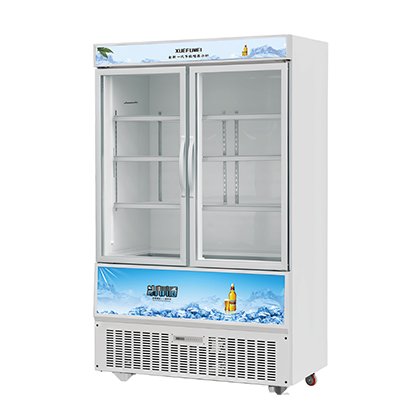
For products that need frozen rather than chilled storage, move to a display freezer instead. These models combine low-temperature storage with product display for frozen foods and other items that cannot be kept in a standard refrigerator.
Glass Door Refrigerator Buying Guide
Still comparing options? These are three questions worth sorting out before you choose a glass door refrigerator. They can save you from ending up with a fridge that is too big, too small, or simply wrong for the way you plan to use it.
Home or Commercial — Do You Really Need the Bigger One?
A commercial fridge can look like the safer choice, but more capacity is not always useful. If it is going beside a home bar, you may never fill it. In a shop, the opposite can happen—a small fridge fills up before the day gets busy.
Read the Home vs. Commercial Guide →
How Much Fridge Space Will You Actually Use?
Start with what is going inside, not the litre number on the product page. Six-packs, tall bottles and boxed food all use shelf space differently. If you are buying for a shop, think about how much stock you want ready before someone has to refill it again.
Find the Right Refrigerator Size →
Glass Door or Solid Door?
For a customer-facing fridge, seeing the drinks or food before opening the door can be useful. Put that same fridge in a back room and the glass may matter far less. There are other trade-offs too, so it is worth comparing the two before deciding.
Compare Glass vs. Solid Doors →
They can use more power than a comparable solid-door refrigerator because glass does not insulate as well as a solid insulated door. But the door is only part of the picture. A small glass door fridge and a large commercial cabinet will obviously have very different power requirements. The actual figure for the model you are buying is much more useful than a general claim about glass-door fridges being “efficient” or “inefficient.”
Mostly because you can see what is there before opening it. That is handy at home, but it matters even more when the refrigerator is being used to sell something. A customer can look over the drinks first and then open the door for the one they want. Staff can also see when a shelf is getting empty without checking every cabinet.
You can absolutely have one at home. The big upright refrigerators you see in shops are only one type. Smaller glass door refrigerators work well for keeping drinks and snacks in a home bar, game room or entertainment area. Our home models start at 60L and go up to 200L, so you do not need to put a shop-sized refrigerator in the house just to get a glass door.
No. Drinks are popular because bottles and cans display well behind glass, but that is not all these refrigerators are used for. Depending on the model, you may see fruit, packaged food, milk, desserts and other chilled products inside them too. They are refrigerators, though—not freezers—so products that need frozen storage belong in a different cabinet.
Sometimes it is simply a difference in how the product is described. A beverage fridge with a glass door is aimed at drinks, while “glass door refrigerator” covers a wider range of uses. That is why you will come across names such as glass door beverage refrigerator, drinks fridge with glass door and glass front refrigerator while shopping for what may look like very similar cabinets.
A little condensation can happen when the room is warm and humid and the glass is cold. For a commercial refrigerator, this is something the door design can be made to deal with rather than something the shop owner should be wiping away all day. For example, our HLC commercial models use electrically heated anti-fog glass to help keep the door clear.
That is a normal job for a commercial refrigerator. Every time the door opens, some warm air gets in, so a shop that sells drinks all day puts much more demand on the refrigerator than a home bar does. This is one reason we separate our home and commercial ranges instead of treating a small glass door fridge as a cheaper substitute for a commercial one.
Not necessarily. A double-door refrigerator gives you more room, but that extra room only helps when you have enough stock to use it. For a smaller drinks selection, a single-door cabinet may leave you with more selling space in the shop. Once you are refilling a smaller fridge several times a day, though, the larger cabinet starts to make a lot more sense.
Yes. We do OEM orders, so the refrigerator can carry your own brand rather than Xuefumei branding. Logo, cabinet color and finish, labels and packaging are some of the things we can change. We can also work with requirements such as voltage, frequency, plug type and supported product configurations. The one thing to keep in mind is cabinet size: we work from our existing refrigerator models rather than building a completely new capacity and cabinet dimension for each order.
That is fine—you do not need to pick a model before you talk to us. Tell us what you are putting in the refrigerator, roughly how much you need to hold, where it will be used, and how many you are looking for. For an OEM order, add the country you are selling into and the changes you need for your brand. That is usually enough for us to start narrowing down the models with you.